$isLighthouse = (int) isLighthouse();
DOWNLOAD

We'd Love to Hear from You

CAPTCHA

Rigid-Flex PCBs: Unifying Strength and Flexibility in a Single Circuit

Rigid-Flex Integration: Connectorless, Compact, Reliable 3D Assemblies

Home

-

PCB FAB

-

For Innovative Form Factors

-

Rigid-Flex PCBs
Rigid-Flex PCBs
Rigid-Flex PCBs
Rigid-Flex PCBs

Rigid-Flex PCBs

Elimination of Connectors&Cables(Enhanced Reliability)

Optimized 3D Packaging&Significant Space/Weight Savings

Superior Performance in High-Vibration&Harsh Environments

Simplified Assembly and Reduced System Cost

Share

What is a Rigid-Flex PCB?

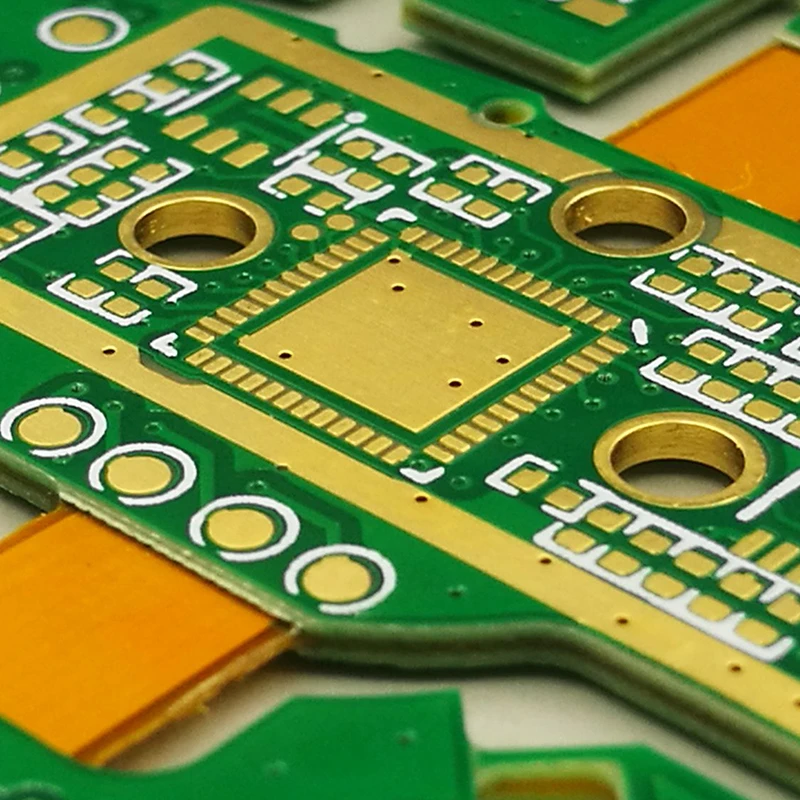
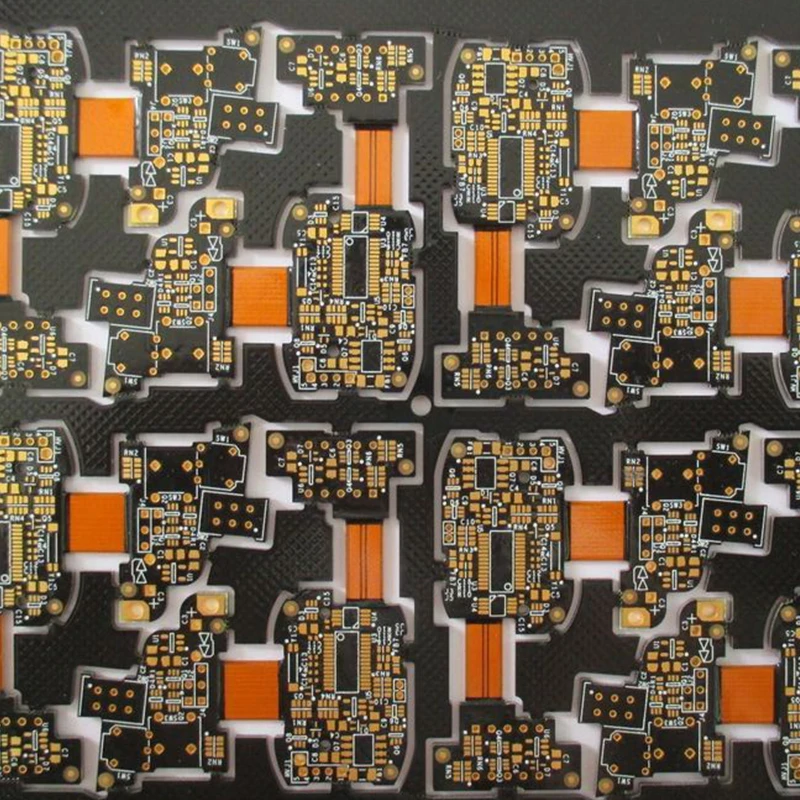
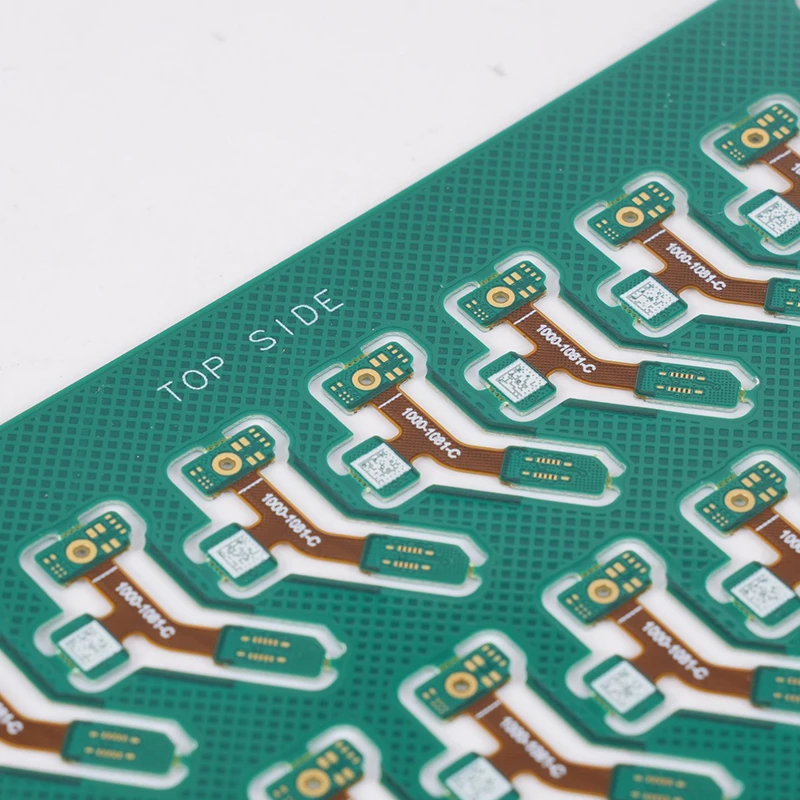
A Rigid-Flex PCB is a hybrid circuit structure that seamlessly integrates rigid PCB substrates (for component mounting and structural support) with flexible PCB interconnects into one continuous, reliable unit. The flexible layers pass through the rigid sections, creating an monolithic "book-binding" style construction that is permanently connected.


Key Differentiator vs. Discrete Solutions: Unlike using separate rigid boards connected by cables or board-to-board connectors, Rigid-Flex is a single, manufactured entity. This eliminates the most common points of failure in electronic assemblies: connectors, solder joints, and cable harnesses.

The Compelling Case for Rigid-Flex:Beyond Conventional PCBs

Rigid-Flex technology solves fundamental architectural challenges in electronic packaging, offering transformative benefits over traditional rigid-board assemblies with connectors and cables.


Key Advantages&Applications by Industry:


Unmatched Reliability:


Benefit: Eliminates the primary points of failure in electronic systems: board-to-board connectors, cables, and their solder joints. This is critical in high-vibration and harsh environments.


Applications:


● Aerospace&Defense: Avionics, missile guidance systems, satellite communications.


● Automotive: Advanced Driver-Assistance Systems(ADAS), engine control units(ECUs), infotainment in high-vibration zones.


● Industrial: Robust robotics, heavy machinery controllers, down-hole drilling equipment.


Superior 3D Packageability:


Benefit: Rigid sections provide stable platforms for components and connectors, while the flex interconnects can be folded into complex 3D shapes, optimizing the use of available space.


Applications:


● Medical: Miniaturized implantable devices(pacemakers, neurostimulators), high-density imaging equipment(endoscopes, ultrasound probes).


● Consumer Electronics: Folding smartphones, compact laptops(360°hinges), high-end drones, wearable devices.


● Telecommunications: Dense server blades, 5G infrastructure units.


Streamlined Assembly&Reduced Total Cost:

Benefit: Simplifies the final product assembly by reducing the number of discrete components(connectors, cables, fasteners)and associated assembly labor. This often results in a lower total system cost despite a higher initial board cost.


Applications: Any product where assembly time, part count, and warranty returns are critical cost drivers.

Rigid-Flex Constructions&Material Stack-up

A successful Rigid-Flex design hinges on a meticulously planned layer stack-up that manages both rigidity and flexibility zones.

Typical Layer Structure:

The stack-up alternates between rigid sections(typically FR-4, High-Tg, or Rogers materials)and flexible sections(polyimide).The flexible dielectric(e.g., 1 or 2 mil polyimide)and its associated copper layers extend continuously through the rigid areas, where they are bonded with additional prepreg and rigid laminate.

Common Configurations:

Type 1: Flex layers only used as an internal, continuous layer within a mostly rigid board.

Type 2: Multiple rigid areas connected by a distinct, exposed flexible"tail."

Type 3: Two or more flexible layers that independently exit a rigid section, allowing complex multi-axis movement.

Type 4&5: Complex multi-layer rigid-flex with three or more conductive layers, often involving HDI(High-Density Interconnect)technologies.

Material Considerations:

Flex Layer: Polyimide film(e.g., 1 or 2 mil), adhesiveless laminate is strongly preferred for reliability in the rigid-to-flex transition zone.

Rigid Layer: Standard FR-4, High-Tg FR-4, or high-frequency laminates as required.

Bonding Material: Low-flow prepregs are essential to control resin flow and prevent stiffening of the intended flex areas.

In-Depth Design for Excellence(DFX)Guidelines

Designing a reliable Rigid-Flex PCB requires a deep understanding of mechanical stresses and manufacturing tolerances.

Critical Design Rules:

Design Parameter

Recommended Practice(For High Reliability)

Risk of Deviation

Flex Bend Radius

Static/Installation Bend:10x total flex thickness

Cracking of copper traces and dielectric.

Rigid-to-Flex Transition

Flexible material must be fully encapsulated within the rigid section.Use curved traces and avoid 90°angles at the transition.

Delamination and mechanical failure at the stress concentration point.

Trace Routing in Flex

Route traces perpendicular to the bend line.Stagger traces on adjacent layers in bend areas.

Concentrated stress leading to early fatigue failure.

Vias&Pads

No vias in dynamic bend areas.Use teardrops on all pad and via connections in flex.

Pad lifting and via barrel cracking.

Annular Ring in Flex

Use a minimum 8 mil annular ring for PTH in flex areas.

Reduced reliability of the plated through-hole.

Controlled Impedance

Requires careful modeling of the entire stack-up.Adhesiveless materials provide more consistent results.Consult us early.

Signal integrity issues,reflections,and data errors.

Our Engineering Partnership:We strongly recommend engaging in our free,collaborative DFM(Design for Manufacturability)process.We will analyze your stack-up,review your mechanical drawings,and provide a comprehensive report to de-risk your project.

Our Rigid-Flex PCB Manufacturing Capabilities

We possess the advanced equipment and process expertise to manufacture highly complex and reliable Rigid-Flex boards.


Technical Specifications:

Layer Count: Up to 20+layers(Rigid+Flex combined).

Rigid Material: FR-4, High Tg FR-4, Halogen-Free, RF Materials(Rogers, Taconic).

Flex Material: Polyimide(1-5 mil standard), Adhesiveless Laminates.

Copper Weight(Flex): 0.5 oz-2.0 oz(Rolled Annealed preferred).

Minimum Flex Trace/Space: 3 mil/3 mil(0.075 mm).

Minimum Laser Drill Size: 0.002"(0.05 mm).

Minimum Mechanical Drill Size: 0.006"(0.15 mm).

Surface Finishes: ENIG, ENEPIG, Immersion Silver, OSP, Electrolytic Hard Gold.

Quality&Reliability Assurance

Cross-Sectional Analysis

Cross-Sectional Analysis

To verify plating integrity in PTHs and the rigid-flex interface.

Continuity&Isolation Testing

Continuity&Isolation Testing

Flying Probe or Fixture.

Flex Cycling Tests

Flex Cycling Tests

On coupons to validate the design's bend life.

Compliance

Compliance

Can be built to IPC-6013 Class 2/3 requirements for Rigid-Flex assemblies.

Your Design Deserves Our Discipline.

Partner with a manufacturer where quality is a measurable, managed outcome.

Contact Us