For Complex & Reliable Interconnect
For Signal Integrity & Speed
For High Power & Harsh Environments
For Innovative Form Factors
PCB Assembly Technologies
PCBA Service Models
Value-Added Services
STENCIL
For Complex & Reliable Interconnect
For Signal Integrity & Speed
For High Power & Harsh Environments
For Innovative Form Factors
PCB Assembly Technologies
PCBA Service Models
Value-Added Services
STENCIL
We'd Love to Hear from You
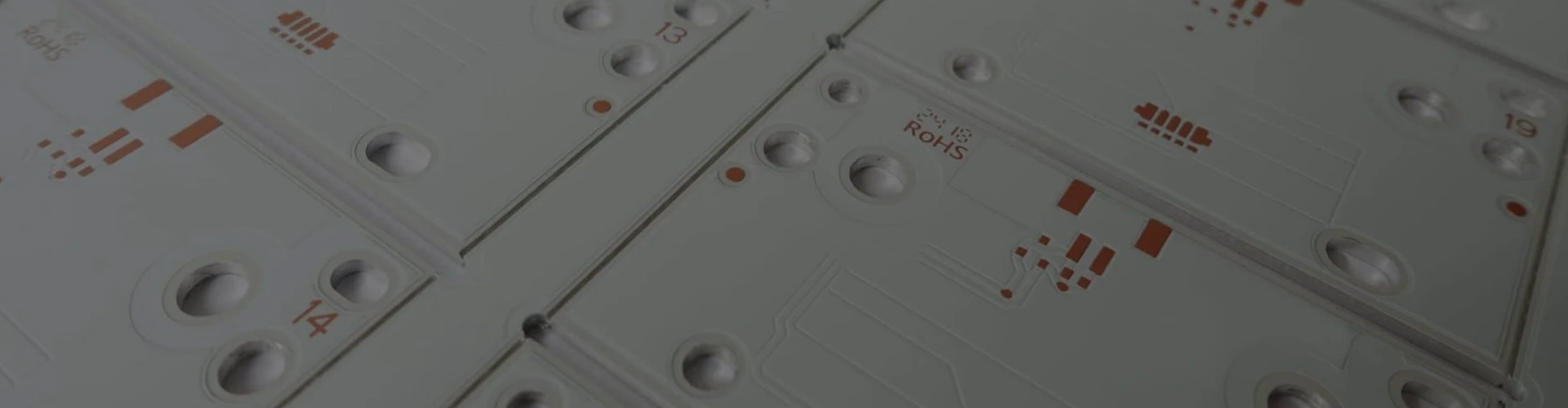
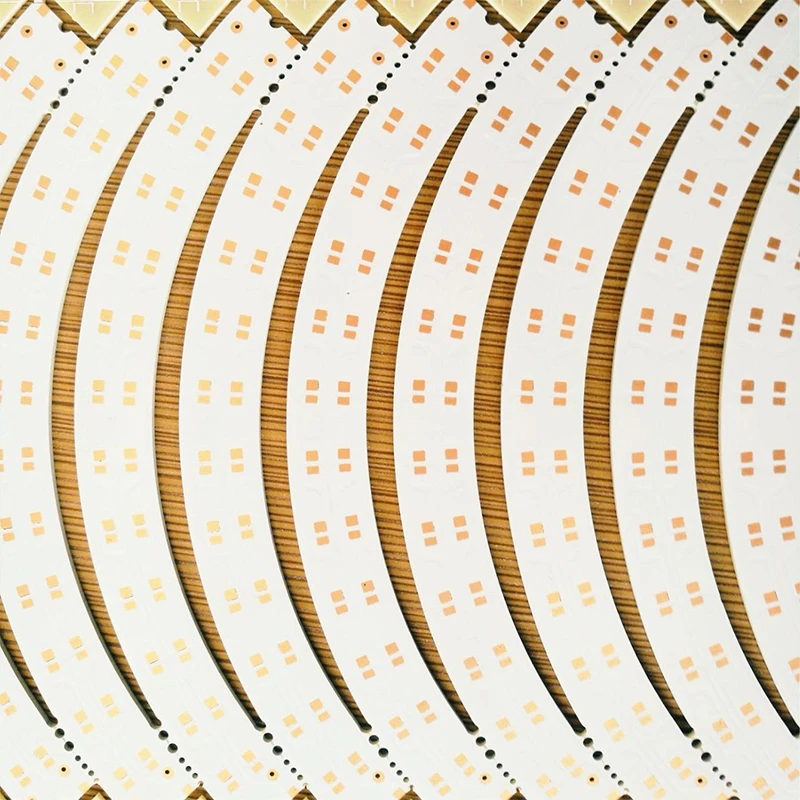
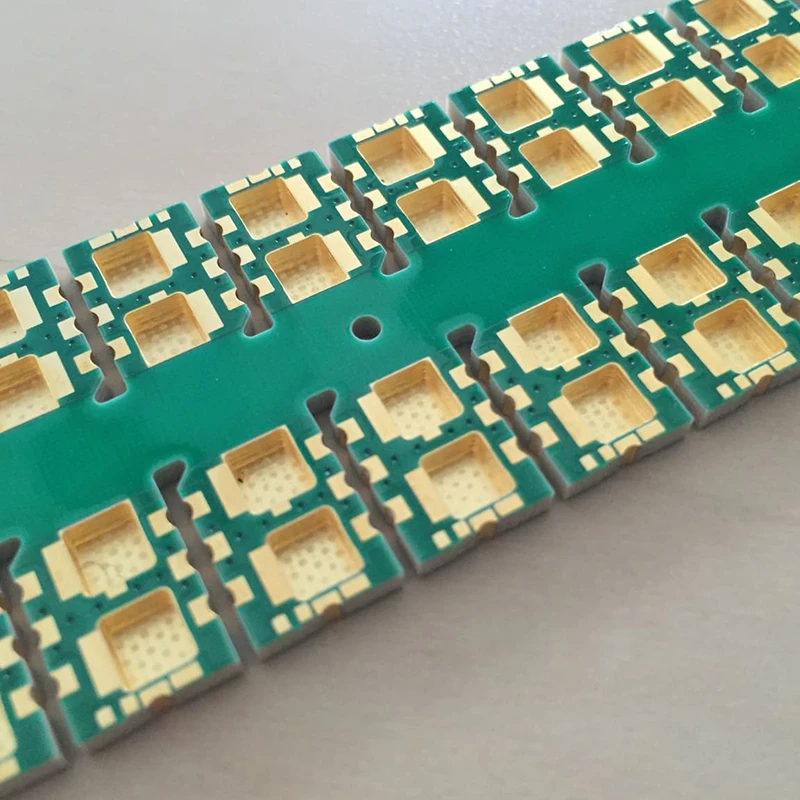
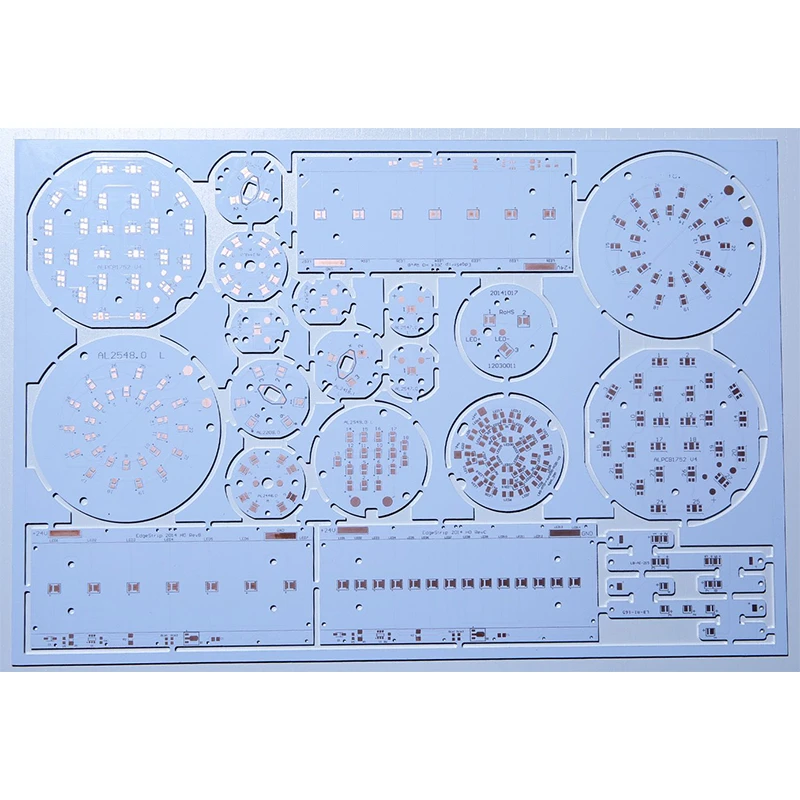
Metal Core PCBs:Superior Heat Dissipation for High-Power Applications
Engineered with Aluminum,Copper,or Iron Alloy Substrates to Maximize Thermal Performance and Reliability.
Aluminum,Copper&Iron Alloy Bases
Extreme Thermal Conductivity(1-400 W/mK)
Dielectric Layer Optimization
High-Power LED&Power Electronics Expertise
What is a Metal Core PCB (MCPCB)?
A Metal Core Printed Circuit Board (MCPCB) is a specialized substrate that replaces the standard FR-4 dielectric core with a metal baseplate—most commonly aluminum, but also copper or steel alloys. The primary function of this metal core is not electrical, but thermal: to rapidly conduct heat away from temperature-sensitive components.
Standard MCPCB Structure:
● Copper Circuit Layer(1-10 oz): The top layer for etching traces and mounting components.
● Thermal Dielectric/Insulation Layer: A thin, thermally conductive but electrically insulating polymer layer. This is the critical component, characterized by its Thermal Conductivity(k) and Breakdown Voltage(Vb).
● Metal Baseplate(1. 0mm to 3. 2mm+): Typically aluminum(cost-effective, good thermal performance)or copper(superior thermal conductivity). Acts as a massive heat spreader and heatsink.
Why Choose MCPCBs?Key Benefits&Applications
MCPCBs are the preferred choice when component heat dissipation becomes the limiting factor for performance, reliability, and miniaturization.
Benefit: Directly transfers heat from components(e.g., LEDs, power ICs)through the dielectric layer into the metal core, which acts as an integrated heatsink.This lowers the operating junction temperature(Tj), which is the single most important factor for long-term reliability.
Applications:
● High-Power&High-Brightness LED Lighting: LED street lights, automotive headlights, stadium lighting, grow lights.
● Power Conversion: Solid-state relays, motor controllers, power supply regulators.
● Automotive: LED arrays, powertrain control modules, headlight/taillight assemblies.
Benefit: The rigid metal substrate provides excellent dimensional stability, reduces board warping, and can withstand higher mechanical stress and vibration compared to FR-4.
Applications:
● High-Vibration Environments: Automotive under-hood electronics, aerospace systems.
● Long-Lifecycle Products: Industrial equipment, infrastructure lighting.
Benefit: Eliminates or reduces the need for bulky external heatsinks and thermal interface materials(TIMs), enabling slimmer, more integrated product designs.
Applications:
● Consumer Electronics: High-power audio amplifiers, projector light engines.
● Telecom Base Stations: Power amplifier modules.
Material Selection&Key Performance Parameters
Choosing the right MCPCB construction depends on balancing thermal,electrical,and cost requirements.
Key Material Comparison:
|
Parameter |
Standard FR-4 |
Aluminum Core MCPCB |
Copper Core MCPCB |
Importance |
|
Thermal Conductivity(Core) |
~0.3 W/mK |
1.0-3.0 W/mK(Typical) |
~380 W/mK(Exceptional) |
Defines the core's intrinsic heat-spreading ability. |
|
Dielectric Layer k Value |
N/A |
0.8-8.0+W/mK |
1.5-8.0+W/mK |
The most critical spec;higher k means less thermal barrier. |
|
Dielectric Breakdown Voltage |
N/A |
>2kV(Standard) |
>2kV(Standard) |
Ensures electrical isolation between circuit and metal base. |
|
Mechanical Strength |
Good |
Excellent |
Superior |
Resistance to bending and vibration. |
|
Cost Factor |
Baseline |
Moderate |
Higher |
Copper core offers the best performance at a premium. |
Our Material Range: We offer a full spectrum from standard aluminum substrates to high-performance copper-core boards and boards with ceramic-filled dielectric layers for ultra-high thermal conductivity(up to 8 W/mK).
MCPCB Design for Manufacturing(DFM)Guidelines
Essential Design Rules:
Thermal Via Strategy: While the metal core is the primary heat path, thermal vias under high-power components(filled with thermally conductive epoxy)can further reduce the thermal resistance to the core.
Component Placement: Group high-heat-generating components to optimize the thermal mass usage.Avoid placing sensitive components directly over areas of high thermal flux.
Dielectric Layer Consideration: Understand that the dielectric layer is a thermal resistor.For the lowest thermal resistance, work with us to select the thinnest dielectric layer that meets your creepage/clearance and breakdown voltage requirements.
Mounting&Finishing: Specify mounting hole requirements(counter-sunk, non-conductive bushings)and surface finish(HASL-LF, ENIG, or OSP are common).The metal base will often be part of the final chassis grounding/heat sinking system.
Clear Specifications: On your fab drawing, explicitly state:
● Metal Core Material&Thickness(e.g., "Aluminum 5052, 1.5mm")
● Dielectric Layer Type/Thickness&Thermal Conductivity(e.g., "100µm dielectric, k=3.0 W/mK")
● Copper Weight on circuit layer.
Pro Tip: Engage Our Thermal DFM Service. Submit your schematic and layout for a Free Thermal Analysis Review. We can advise on optimal stack-up, material selection, and identify potential thermal bottlenecks before fabrication.
Our MCPCB Manufacturing Capabilities
We specialize in the precise processing required for reliable, high-performance Metal Core PCBs.
Core Capabilities:
Materials: Aluminum(5052, 6061), Copper(C1100), and hybrid constructions.
Thermal Dielectrics: Standard to high-performance(k=0.8 to 8.0+W/mK).
Copper Weights: 1oz to 6oz+on the circuit layer.
Routing&Machining: High-precision CNC routing for complex outlines, slots, and mounting holes in the metal base.
Surface Finishes: HASL-LF, ENIG, Immersion Silver, OSP.
Quality&Testing:
Breakdown Voltage Testing: 100%dielectric layer integrity testing to ensure safety.
Thermal Imaging: Optional thermal performance validation under load.
Controlled Impedance: Available on advanced MCPCB constructions for RF applications.
Your Design Deserves Our Discipline.
Partner with a manufacturer where quality is a measurable, managed outcome.