For Complex & Reliable Interconnect
For Signal Integrity & Speed
For High Power & Harsh Environments
For Innovative Form Factors
PCB Assembly Technologies
PCBA Service Models
Value-Added Services
STENCIL
For Complex & Reliable Interconnect
For Signal Integrity & Speed
For High Power & Harsh Environments
For Innovative Form Factors
PCB Assembly Technologies
PCBA Service Models
Value-Added Services
STENCIL
We'd Love to Hear from You
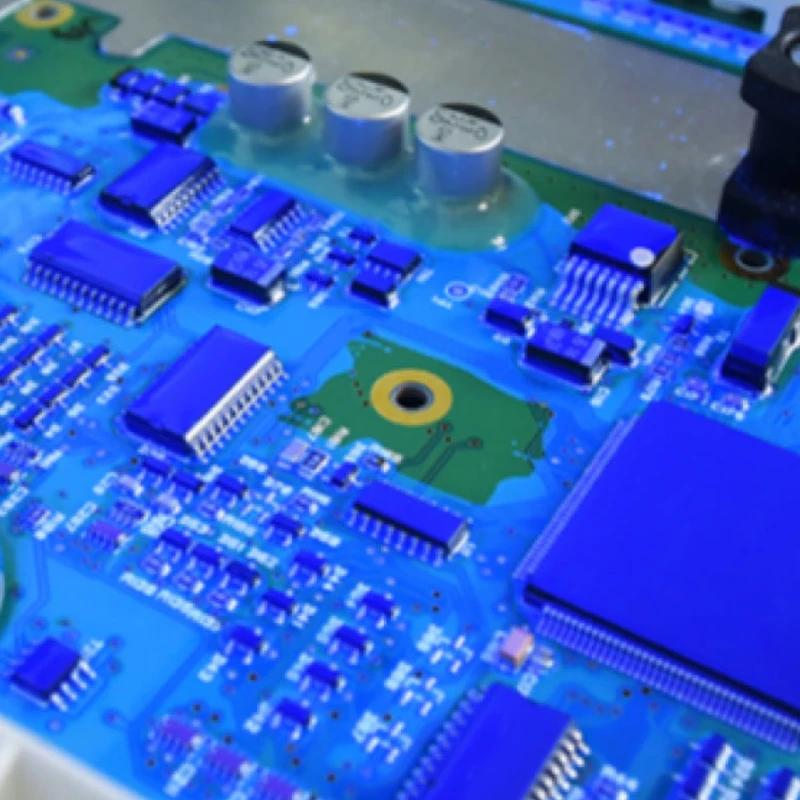
Conformal Coating & Potting: Engineered Defense for Harsh Environments
Protect your PCBA from moisture, chemicals, dust, and mechanical stress with precision application and IPC-certified processes.
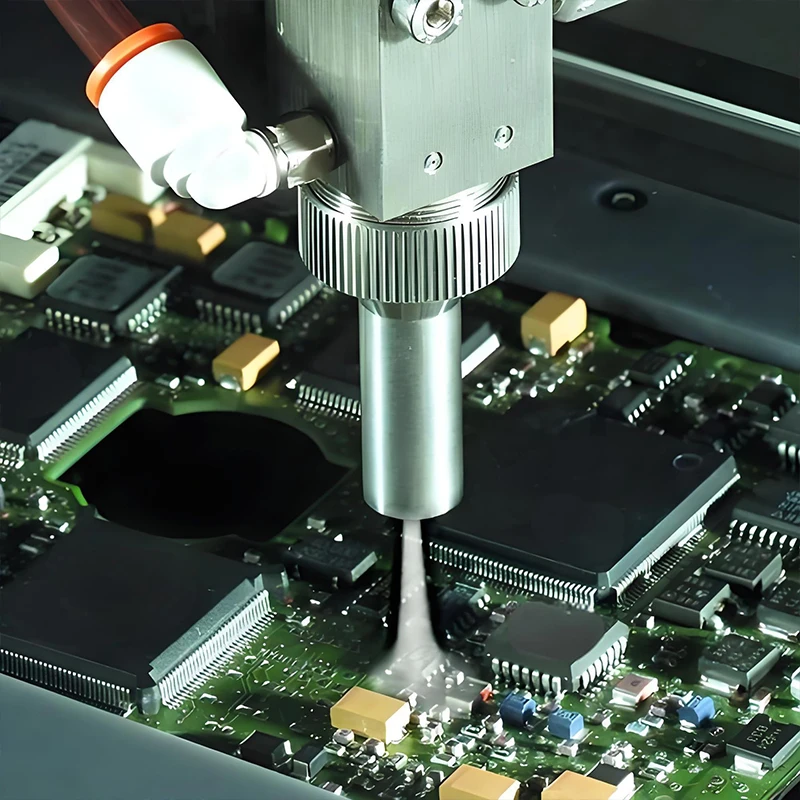
Automated Selective&Dip Coating
Potting&Encapsulation for Extreme Protection
IPC-CC-830&UL Certification Compliance
Material Science Expertise&DFM Guidance
The Critical Role of Environmental Protection
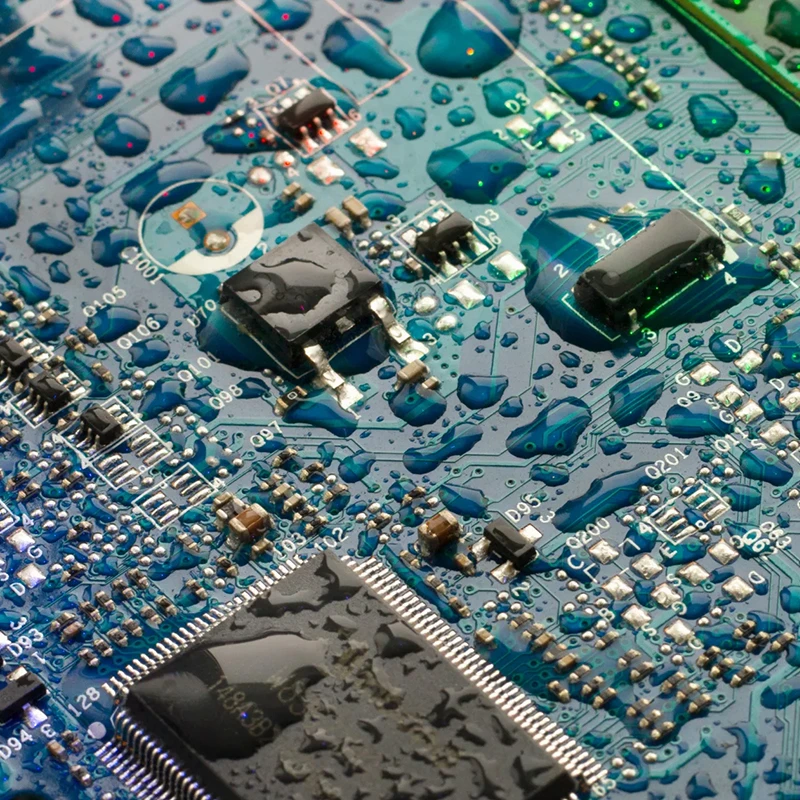
Electronic assemblies operating outside controlled environments face relentless threats: condensation, chemical spills, airborne contaminants, thermal cycling, and vibration. Conformal coating and potting are not merely finishing steps; they are critical reliability-enhancing processes that create a protective barrier, preventing dendritic growth, corrosion, and electrical shorts. At SENTAK, we engineer these protections with precision, ensuring your products achieve extended service life in automotive, industrial, marine, and outdoor applications.
Coating vs. Potting: Selecting the Right Shield
The choice depends on the level of environmental exposure and required mechanical robustness.
|
Aspect |
Conformal Coating |
Potting / Encapsulation |
|
Form & Purpose |
Thin, protective film (25-250 µm). Barrier protection. |
Thick, solid fill. Structural & environmental encapsulation. |
|
Key Protection |
Moisture, dust, mild chemicals, fungus. |
Moisture, severe chemicals, physical impact, vibration, thermal management. |
|
Reworkability |
Possible with specialized solvents and processes. |
Essentially permanent. Very difficult to rework. |
|
Typical Applications |
Automotive ECUs, industrial controls, consumer electronics. |
Outdoor sensors, submersible devices, high-voltage modules, ruggedized military gear. |
Our Core Capabilities&Materials Expertise
1. Conformal Coating Processes
We match the application method to your board's geometry and production volume.
Selective Robotic Coating: For high precision and throughput. Masks connectors and test points with micron-level accuracy.
Dip Coating: For full, uniform coverage on high-volume boards.
Spray Coating(Manual/Automated): A versatile solution for complex geometries or mixed-technology boards.
Masking&Depaneling Expertise: We design and implement effective masking strategies to keep critical areas coating-free.
2. Potting&Encapsulation
For total protection, we fill enclosures with resilient compounds.
Vacuum Potting: Eliminates air bubbles for maximum dielectric strength and thermal conductivity.
Dual-Cartridge Dispensing: For precise mixing and application of two-part epoxies or silicones.
Material Selection Support: We guide you through the trade-offs between silicones(flexible, wide temp range), epoxies(rigid, high strength), and polyurethanes(balanced).
3. Key Material Classes
|
Material |
Key Properties |
Best For |
|
Acrylic (AR) |
Fast cure, easy rework, good moisture resistance. |
General-purpose, high-volume consumer/industrial. |
|
Silicone (SR) |
Excellent flexibility, extreme temperature range (-55°C to +200°C), high humidity resistance. |
Automotive, aerospace, high-thermal-cycling environments. |
|
Urethane (UR) |
Abrasion resistance, good chemical resistance, moderate flexibility. |
Abrasive or mildly chemical environments. |
|
Epoxy (ER) |
Hard, rigid coating, excellent moisture and chemical barrier. |
Where high dielectric strength and structural rigidity are needed. |
|
Parylene (XY) |
Ultra-thin, pinhole-free conformal coating applied via vapor deposition. |
Premium protection for ultra-miniaturized or highly sensitive devices. |
Design for Protection(DFP)Guidelines
Success starts on the drawing board.Collaborate with us early to optimize your design.
Avoid Sharp Edges: They cause coating thinning.Use rounded corners where possible.
Define Keep-out Areas: Clearly specify connectors,test points,heat sinks,and optical components that must remain uncoated.
Consider Component Height Variation: Potting compounds flow;tall and short components can lead to uneven stress or air pockets.
Plan for Stress Relief: Potting compounds expand and contract.Use flexible compounds or design features to prevent stress on solder joints.
Pro Tip: Submit your design for a Free DFP Review.We'll identify potential issues like capillary draw into connectors or thermal management conflicts.
Is Your Application Demanding Protection?
Our services are critical for:
Automotive&Transportation: Under-hood controls,sensor modules.
Industrial Electronics: Factory automation,outdoor instrumentation.
Lighting: Harsh-environment LED drivers and fixtures.
Consumer&Marine: Wearables,marine electronics,outdoor tech.
Medical&Mil/Aero: Devices requiring extreme reliability.
Quality&Process Compliance
Our processes are designed for reliability and auditability.
IPC Compliance
All coatings are applied and inspected per IPC-CC-830B standards for qualification and performance.
Coating Thickness Verification
Measured using ultrasonic or eddy current gauges to ensure specification compliance.
Adhesion Testing
Tape tests per ASTM D3359 to validate coating bond strength.
Curing Process Control
Precision ovens and monitored cure cycles ensure complete polymerization and optimal material properties.
Your Design Deserves Our Discipline.
Partner with a manufacturer where quality is a measurable, managed outcome.