For Complex & Reliable Interconnect
For Signal Integrity & Speed
For High Power & Harsh Environments
For Innovative Form Factors
PCB Assembly Technologies
PCBA Service Models
Value-Added Services
STENCIL
For Complex & Reliable Interconnect
For Signal Integrity & Speed
For High Power & Harsh Environments
For Innovative Form Factors
PCB Assembly Technologies
PCBA Service Models
Value-Added Services
STENCIL
We'd Love to Hear from You
HDI PCBs: Maximizing Performance in Minimal Space
Engineer higher functionality into smaller form factors with advanced microvia and sequential lamination technology.
Microvias&Advanced Build-Up Structures
Finer Traces for Increased Component Density
Enhanced Signal Integrity for High-Speed Designs
Expert Guidance from Design to Production
What are HDI PCBs?
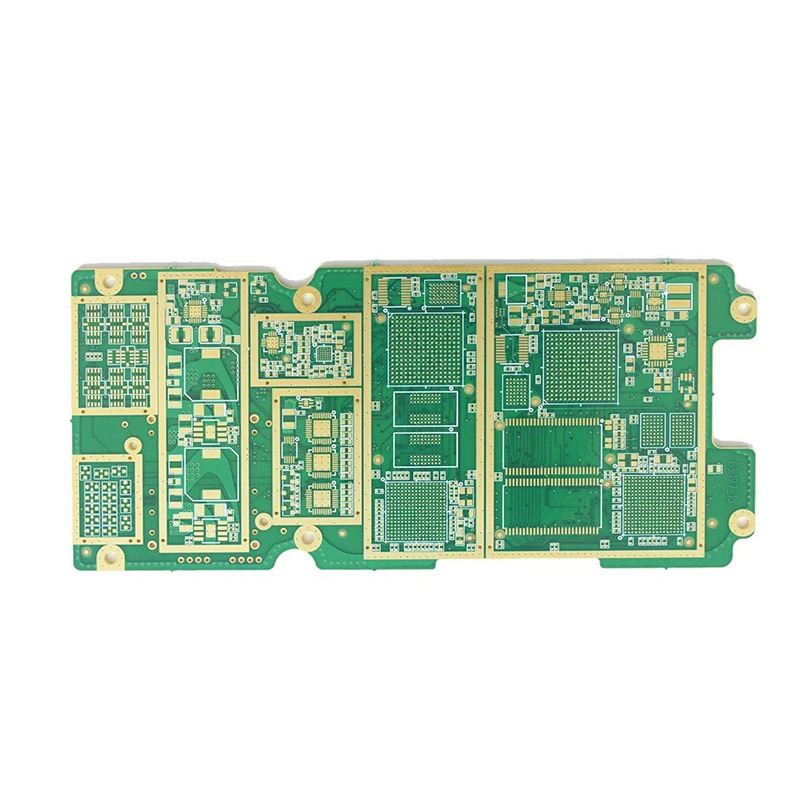
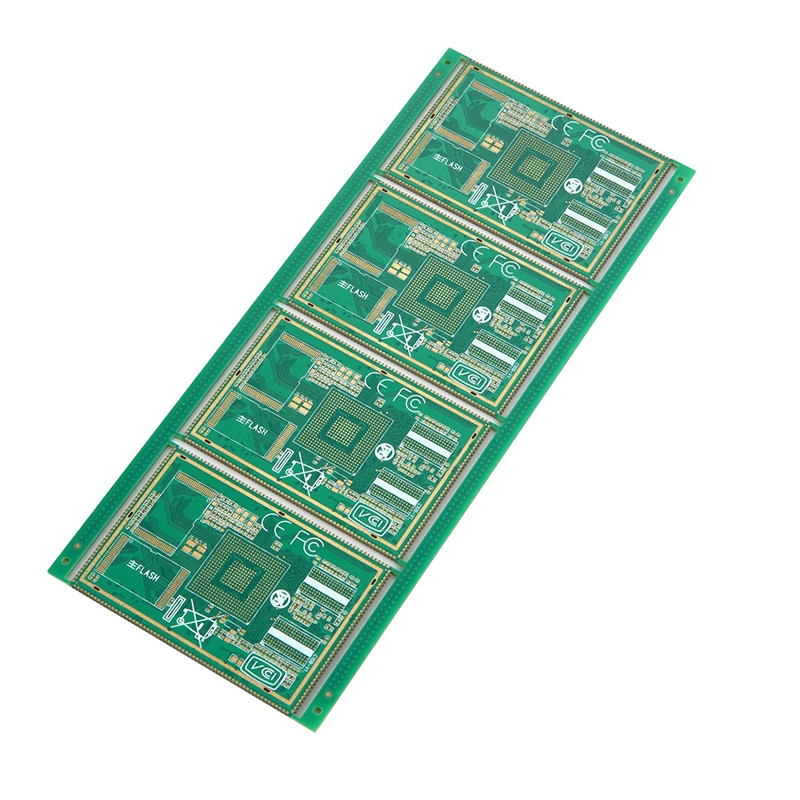
High-Density Interconnect(HDI)PCBs represent a superior class of printed circuit boards defined by higher wiring density per unit area than conventional boards. This is achieved through the use of microvias(typically less than 150µm in diameter), finer trace widths, and higher connection pad density. HDI technology is not merely about miniaturization; it is essential for enabling advanced electronics by providing the necessary routing solutions for high-pin-count components like fine-pitch BGAs and processors, while also improving electrical performance through shorter signal paths and reduced inductance/capacitance.
Core Value Proposition
Space Savings
Enable sleeker,lighter,and more compact end products.
Performance Enhancement
Improve signal integrity and reduce noise in high-speed digital and RF applications.
Functional Enablement
Make advanced IC packaging(e.g., CSP, PoP)manufacturable and reliable.
HDI Structures & Our Manufacturing Expertise
The performance of an HDI board is defined by its build-up structure. We specialize in manufacturing the most common and advanced HDI stack-ups.
|
Structure Type |
Description |
Ideal Application |
SENTAK's Capability |
|
1+N+1 |
Single microvia layer on top and bottom of a core. |
Cost-effective entry into HDI for breaking out fine-pitch BGAs. |
High-yield standard process, rapid turnaround. |
|
2+N+2 |
Two sequential microvia layers on top and bottom. |
Higher complexity, dense component breakout, improved electrical performance. |
Advanced laser drilling and lamination control. |
|
Any-Layer HDI (i+N+i) |
Microvias can be placed on any layer to connect any adjacent layers. |
Maximum density and design freedom (e.g., smartphones, ultra-compact devices). |
Premier expertise in complex sequential lamination. |
|
Parameter |
Specification |
Benefit |
|
Minimum Laser Via Size |
75µm - 100µm (3-4 mil) |
Enables extremely dense interconnects. |
|
Minimum Trace/Space |
40µm / 40µm (1.6 mil / 1.6 mil) |
Supports high wiring density and fine-line circuitry. |
|
Microvia Aspect Ratio |
0.8:1 (for reliable plating) |
Ensures consistent plating quality and reliability. |
|
Layer Count |
Up to 20+ layers with HDI |
Handles highly complex, multi-functional designs. |
|
Materials |
FR-4, Mid-Loss (e.g., IT-158), High-Speed Laminates |
Matches electrical performance to application needs. |
Contact SENTAK – Your Reliable HDI PCB Supplier Today
Start your project with experienced engineers and advanced production capabilities.
Design for HDI Success:Critical Guidelines
Transitioning to HDI requires a shift in design philosophy.Early collaboration is key to optimizing cost,manufacturability,and performance.
Via-in-Pad(VIP): Essential for BGA pitches below 0.8mm.Requires via filling(conductive or non-conductive)to prevent solder wicking and ensure planarity.
Stack-Up Planning: This is the most critical step.Engage with our engineers early to define the optimal layer count,material sequence,and via structure for your electrical and thermal requirements.
Routing Strategy: Leverage microvias for efficient escape routing under BGAs.Utilize buried vias to increase inner-layer routing channels.
We strongly recommend utilizing our Free HDI DFM Review Service.Upon receiving your design data,our engineers will:
Analyze your stack-up and via structures for manufacturability.
Provide specific feedback on trace widths,clearances,and pad sizes.
Suggest potential optimizations to reduce layer count or improve yield.
Deliver a formal report with actionable recommendations.
Applications & Industries of HDI PCBs
Mobile&Consumer Devices: Smartphones, tablets, wearables, digital cameras.
High-Performance Computing: Servers, GPUs, high-speed network switches and routers.
Medical Electronics: Portable diagnostic equipment, imaging systems, implantable devices.
Automotive Advanced Driver-Assistance Systems(ADAS): Radar, LiDAR, and sensor fusion modules.
Aerospace&Defense: Avionics, communications, and guidance systems
Quality&Reliability Assurance
Our HDI manufacturing is governed by stringent controls to ensure the highest reliability:
Standards
Fabrication and inspection to IPC-6012 Class 2/3 and IPC-2226(Design Standard for HDI).
Advanced Inspection
Automated Optical Inspection(AOI),Cross-Sectional Analysis for via quality,and 100%Electrical Testing.
Material Traceability
Full documentation for all laminates and processes used.
Continuous Process Control
Real-time monitoring, statistical process control (SPC) and periodic reliability validation to stabilize production and minimize defects.
Your Design Deserves Our Discipline.
Partner with a manufacturer where quality is a measurable, managed outcome.