For Complex & Reliable Interconnect
For Signal Integrity & Speed
For High Power & Harsh Environments
For Innovative Form Factors
PCB Assembly Technologies
PCBA Service Models
Value-Added Services
STENCIL
For Complex & Reliable Interconnect
For Signal Integrity & Speed
For High Power & Harsh Environments
For Innovative Form Factors
PCB Assembly Technologies
PCBA Service Models
Value-Added Services
STENCIL
We'd Love to Hear from You
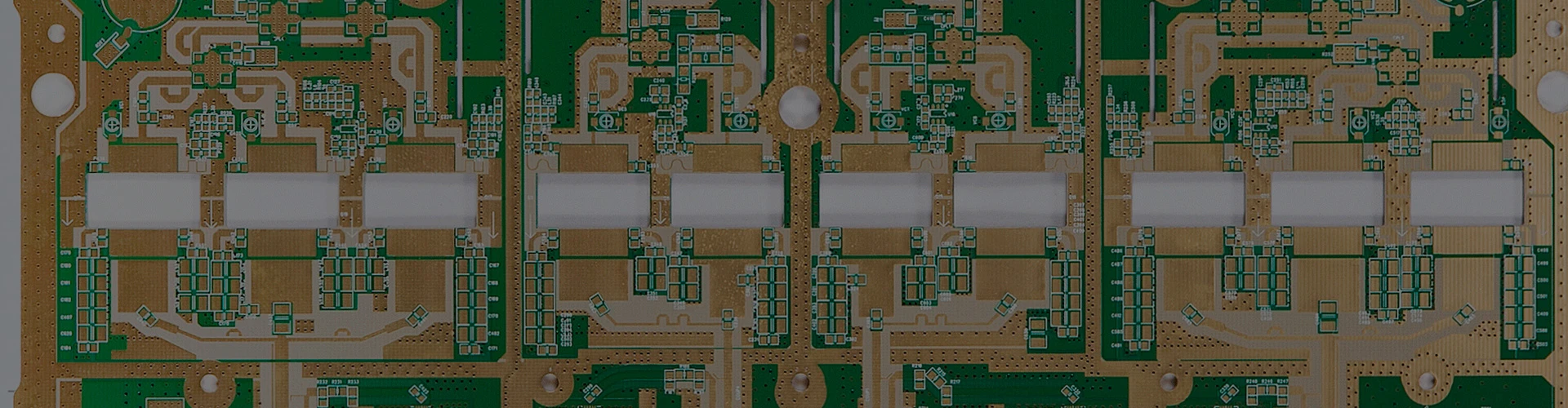
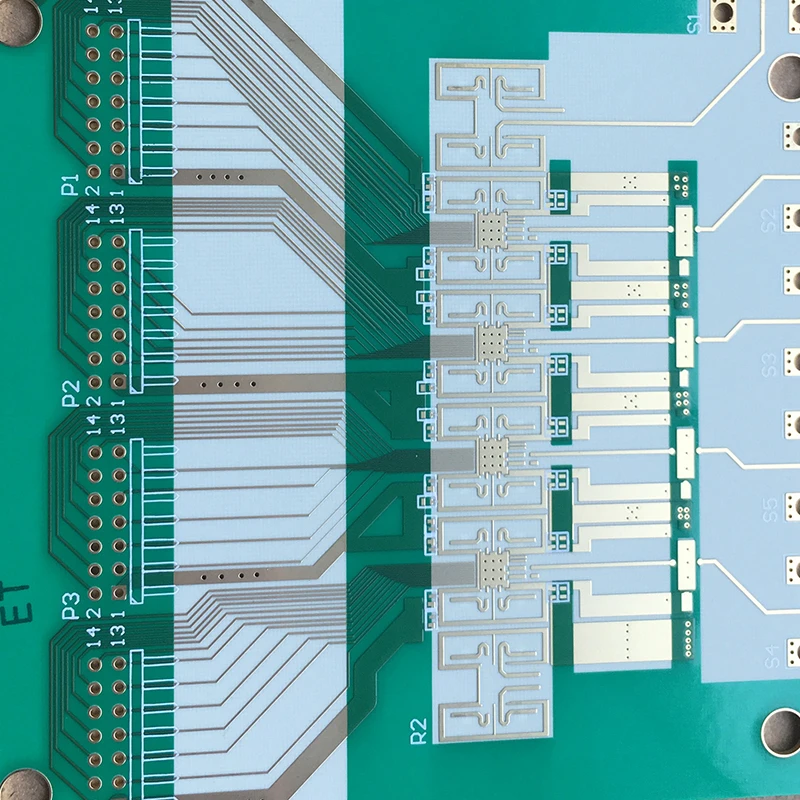
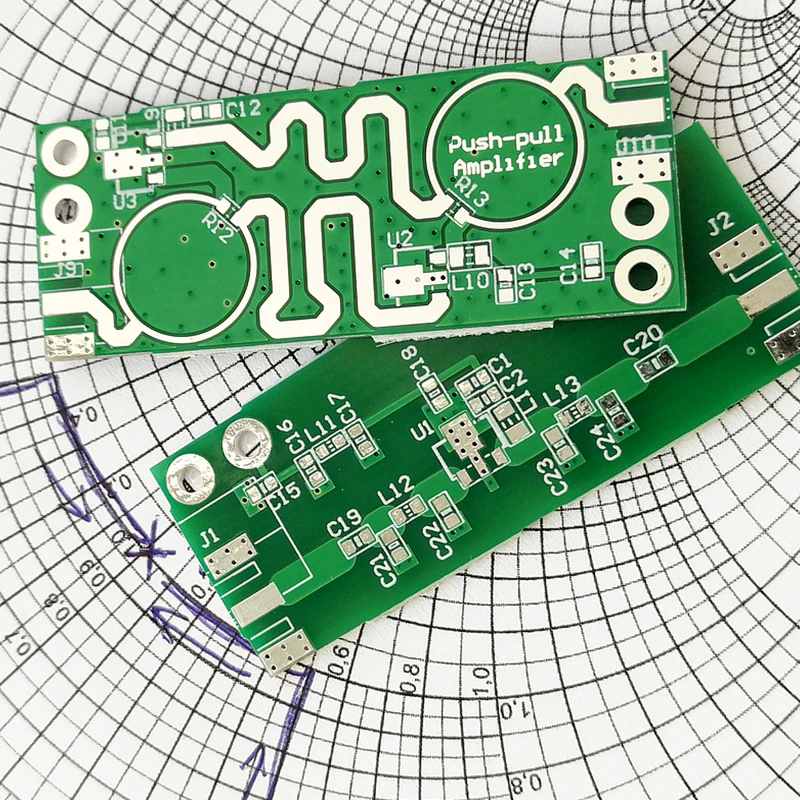
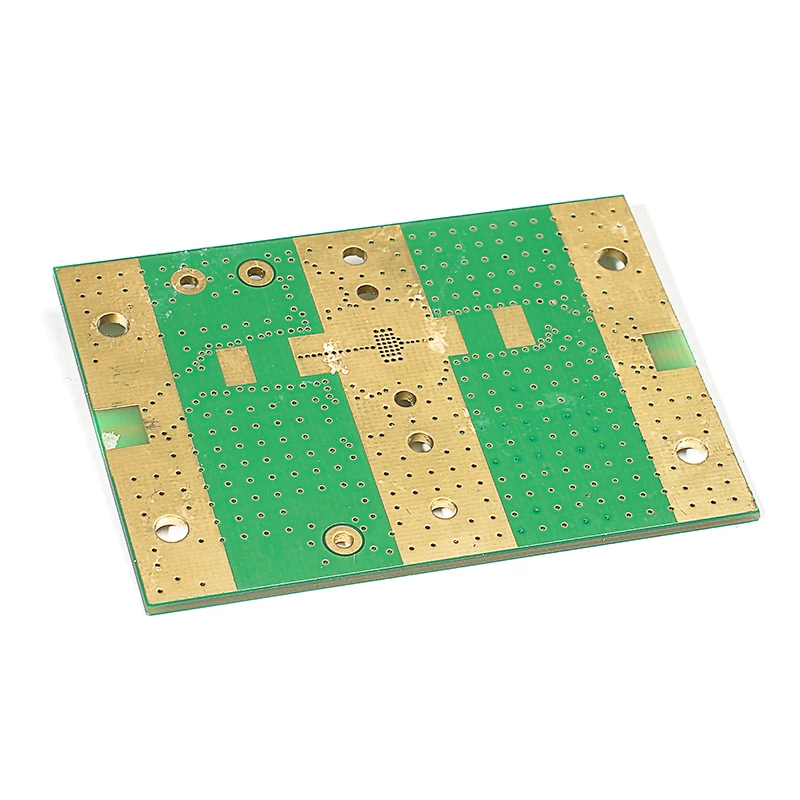
RF & High-Frequency PCBs: Precision Materials for Critical Signal Performance
Consistent low-loss performance for wireless, telecom, and high-speed digital — using specialized laminates and controlled-impedance fabrication
Advanced Low-Loss Laminates(Rogers,Taconic,Isola)
Precise Controlled Impedance&Signal Integrity Management
Strict Dielectric Constant(Dk)&Loss Tangent(Df)Control
Expert RF-optimized Stack-up Design&Engineering Support
The Foundation of High-Frequency Performance: Beyond Standard Materials
The definition of a high-frequency PCB can vary across the industry, but generally, it refers to a printed circuit board designed to operate at frequencies above 1 GHz. High-frequency PCBs require strict control over physical properties, manufacturing precision, and technical parameters to ensure reliable performance.
These high-frequency PCBs are widely used in advanced applications such as radar systems, military equipment, aerospace electronics, and other high-performance fields.
When designing high-frequency PCBs, engineers must carefully consider several critical parameters to meet the signal integrity and performance requirements of specific applications, including:
High-frequency PCB design requires precision, advanced materials, and strict quality control to achieve optimal performance in demanding electronic systems.
Standard FR-4 materials exhibit significantly increased signal loss and unstable Dielectric Constant (Dk) at radio frequencies (RF) and higher frequencies. RF & High-Frequency PCBs require engineered substrate materials with tightly controlled electrical properties to maintain signal integrity, minimize attenuation, and ensure consistent performance.
The Core Challenge: As signal frequencies increase, parasitic effects like signal loss, dispersion, and crosstalk become dominant. The choice of laminate material and fabrication precision are no longer secondary but primary determinants of circuit functionality.
Why Specialized Materials Matter
Low&Stable Dielectric Constant(Dk)
Ensures predictable signal propagation speed and consistent impedance.
Low Dissipation Factor(Df)
Minimizes signal energy loss(attenuation)as heat.
Smooth Copper Surface
Reduces skin effect losses at high frequencies.
Controlled Thermal Coefficient of Dk
Maintains performance stability across operational temperature ranges.
Key Material Properties & Selection Guide
Selecting the correct substrate is the most critical decision in RF/high-frequency design. Performance is driven by a few key parameters.
|
Property |
Standard FR-4 |
High-Frequency Laminate (e.g., Rogers RO4000®) |
Why It Matters for RF |
|
Dielectric Constant (Dk) |
~4.2-4.5 (varies with freq.) |
2.2 to 10.2 (tight tolerance, e.g., ±0.05) |
Directly controls impedance and signal phase. Stability is crucial. |
|
Dissipation Factor (Df) |
~0.015 @ 1 GHz |
0.001 to 0.005 @ 10 GHz |
Lower Df means lower signal loss, essential for high-frequency and long traces. |
|
Thermal Coefficient of Dk |
Higher |
Very Low (e.g., -45 ppm/°C) |
Preforms shift in electrical performance with temperature changes. |
|
Copper Surface Roughness |
Standard (Ra ~2.0+ µm) |
Very Low Profile (Ra < 0.5 µm) |
Smoother copper drastically reduces conductor loss at microwave frequencies. |
|
Moisture Absorption |
Higher |
Very Low (< 0.1%) |
Absorbed moisture alters Dk and increases loss. |
Our Material Portfolio: We partner with leading laminate suppliers to offer the optimal material for your frequency range and budget, including:
● Premium High-Frequency: Rogers, Taconic, Arlon
● High-Performance Hybrid: Isola FR408HR, I-Tera MT40, Nelco N4000-13
● Cost-effective RF: Shengyi SLY-series, Panasonic Megtron
Work with a Professional High Frequency PCB Manufacturer – Upload your Gerber files and receive a fast, reliable quote.
Design for Manufacturing (DFM) Best Practices for RF PCBs
RF design requires close collaboration between designer and fabricator from the earliest stages.
Early Engagement on Stack-up
Submit your target impedance, layer count, and frequency requirements. Our engineers will model and propose a stack-up using real material Dk values from our inventory to meet your goals.
Comprehensive Impedance Coupon Design
Include test coupons for all controlled impedance lines (single-ended, differential) in your panel. This allows us to validate and tune our process to your specific design.
Define Critical Tolerances
Clearly specify impedance tolerance (e.g., ±10%), line width/space tolerances, and any critical via structures (blind/buried) on your fabrication drawing.
Plan for Grounding & Shielding
Ensure a robust, low-impedance return path. Specify via fencing for waveguide structures and define keep-out areas under sensitive components.
Leverage Our RF-DFM Service
Submit your Gerbers and specifications for a Free DFM Review. We will analyze impedance models, material suitability, and identify potential yield or performance risks.
Our Precision Manufacturing Controls
Fabricating high-frequency pcbs demands process discipline tailored to sensitive materials.
Impedance Modeling&Process Control: We use field-solving software(e.g., Polar SI9000)and adjust pre-press and etch compensation to hit target impedances, verified by coupon testing.
Cleanline&Etch Process: Optimized for fine-line geometries and smooth trace edges to minimize loss and reflections.
Plating Uniformity: Controlled plating processes ensure consistent copper thickness in through-holes and vias, critical for RF via performance.
Lamination Press Profiling: Specialized thermal cycles for high-frequency laminates to prevent delamination and minimize Dk drift.
Electrical Testing: Final electrical testing(where specified)to validate continuity and isolation.
Primary Applications & Industries
RF and High-Frequency PCBs enable critical functionality across modern technology sectors.
Wireless Communications: 5G/6G infrastructure, base station antennas, small cells, RF transceivers.
Aerospace&Defense: Radar systems, satellite communications, electronic warfare, avionics.
Automotive: ADAS sensors(radar), V2X communication, GPS modules, infotainment systems.
High-Speed Digital Computing: High-speed server backplanes, network switches/router RF fronts, data center interconnects.
IoT&Consumer Devices: WiFi 6/6E/7 modules, Bluetooth devices, RFID systems.
Your Design Deserves Our Discipline.
Partner with a manufacturer where quality is a measurable, managed outcome.